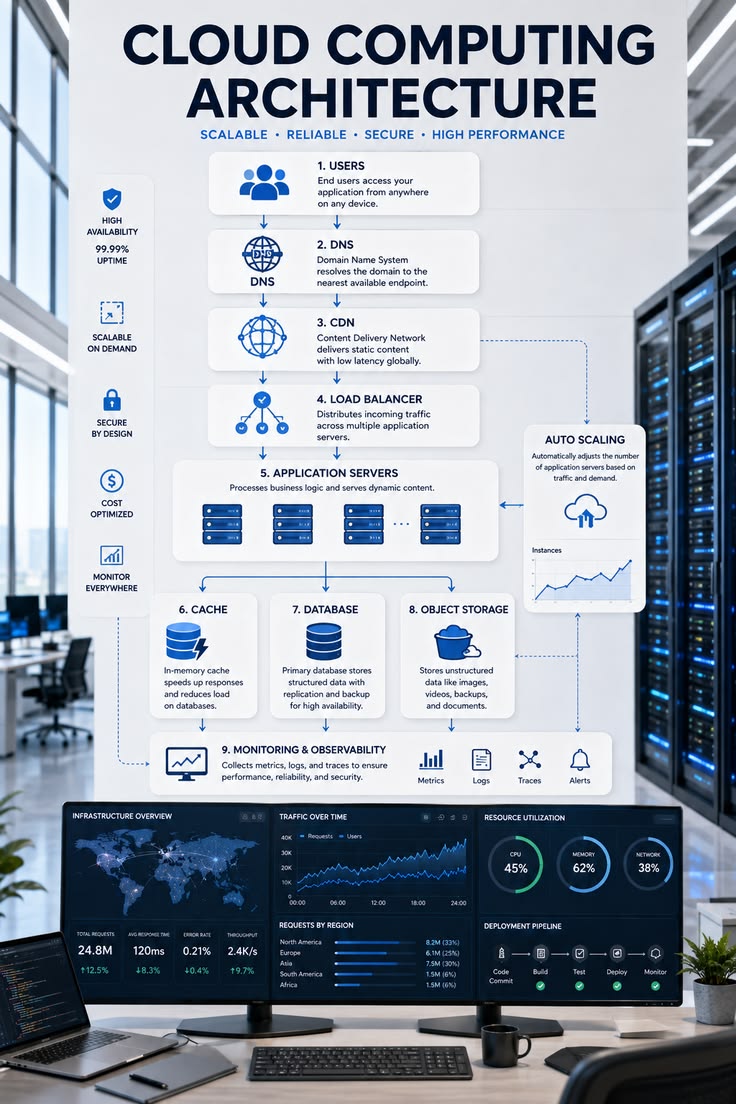
Saying a file is stored 'in the cloud' can make it sound abstract, almost as if it exists nowhere in particular. In reality, cloud storage means your files are saved on physical servers in a data center somewhere, managed by a company, and accessible to you over the internet.
How it actually works
When you upload a file to a cloud storage service, it travels over the internet to a data center, where it's saved — often copied across multiple servers or even multiple locations for redundancy. When you access that file later, it's retrieved and sent back to whichever device you're using.
Why redundancy matters
- If one server fails, your data can still be recovered from a backup copy
- Geographic redundancy protects against localized outages or disasters
- Most reputable providers maintain multiple copies without any extra effort required from you
What to actually pay attention to
Where a provider's data centers are physically located can matter for legal and privacy reasons, since data protection laws vary by country. It's also worth checking whether files are encrypted both while being transferred and while sitting in storage — a detail most reputable providers list clearly in their security documentation.
Frequently asked questions
Is my data actually stored in "the cloud," or on a real physical server?
Always a real physical server — usually several, in geographically distributed data centers, with your data replicated across multiple locations for redundancy. "The cloud" is just infrastructure someone else owns and manages on your behalf.
Can a cloud provider see my files?
Depends on the encryption model — many mainstream providers can technically access unencrypted files for support and legal-compliance reasons, while "zero-knowledge" providers use encryption designed so even they can't read your data.
What happens to my files if the cloud provider shuts down?
Reputable providers typically give advance notice and an export window, but it's still worth keeping an independent backup of anything critical rather than relying on a single storage provider entirely.