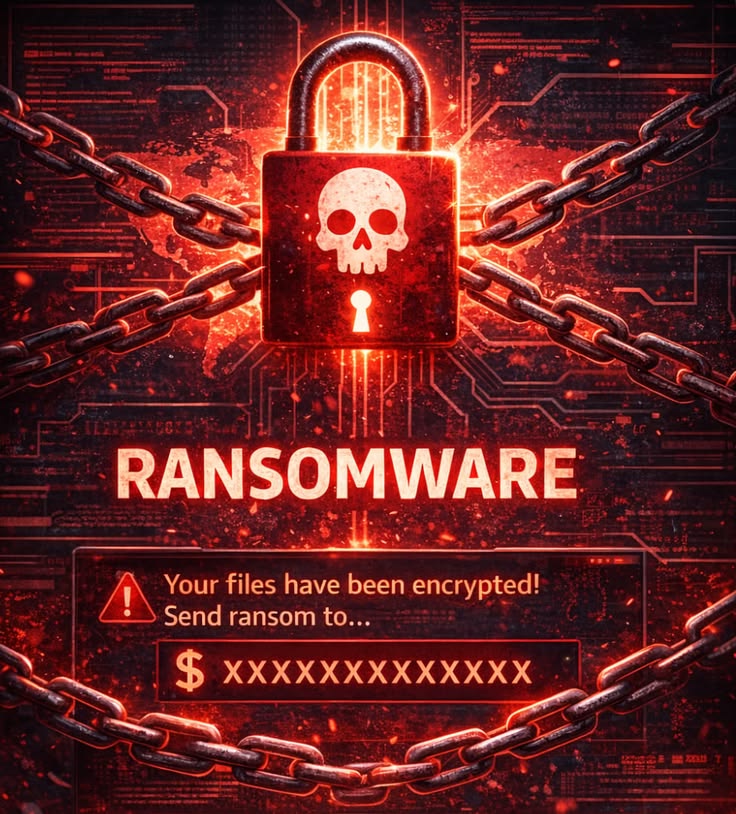
Ransomware is a type of malicious software that locks up a victim's files — sometimes an entire computer or network — and demands payment in exchange for restoring access. It's become one of the more costly categories of cybercrime, affecting individuals, hospitals, and businesses alike.
Common ways it spreads
- Malicious email attachments disguised as invoices, resumes, or shipping notices
- Compromised websites that quietly download malware in the background
- Weak or reused passwords on remote access tools, giving attackers a direct entry point
- Outdated software with known security vulnerabilities that haven't been patched
Why backups are the single best defense
The core threat of ransomware is losing access to your files. Regular backups — ideally stored somewhere disconnected from your main system, like an external drive or a separate cloud account — remove much of that leverage. If your files are already safely backed up elsewhere, a ransomware demand loses most of its power.
The best time to think about ransomware protection is before an attack, not during one — recovery options shrink dramatically once files are already locked.
Basic habits that reduce risk
Keeping software updated, being cautious with unexpected email attachments, and using strong, unique passwords on any remote access tools all significantly reduce the most common entry points attackers rely on.
A real-world example
A small accounting firm had one employee open what looked like an invoice attachment from a familiar vendor's email — except the vendor's account had itself been compromised earlier that week. Within hours, files across the shared network drive were encrypted, and a ransom note appeared demanding payment in cryptocurrency. Because the firm had offline backups from the previous night, they restored their systems without paying, losing only a day of work — the single detail that made the difference between a costly inconvenience and a business-ending event.