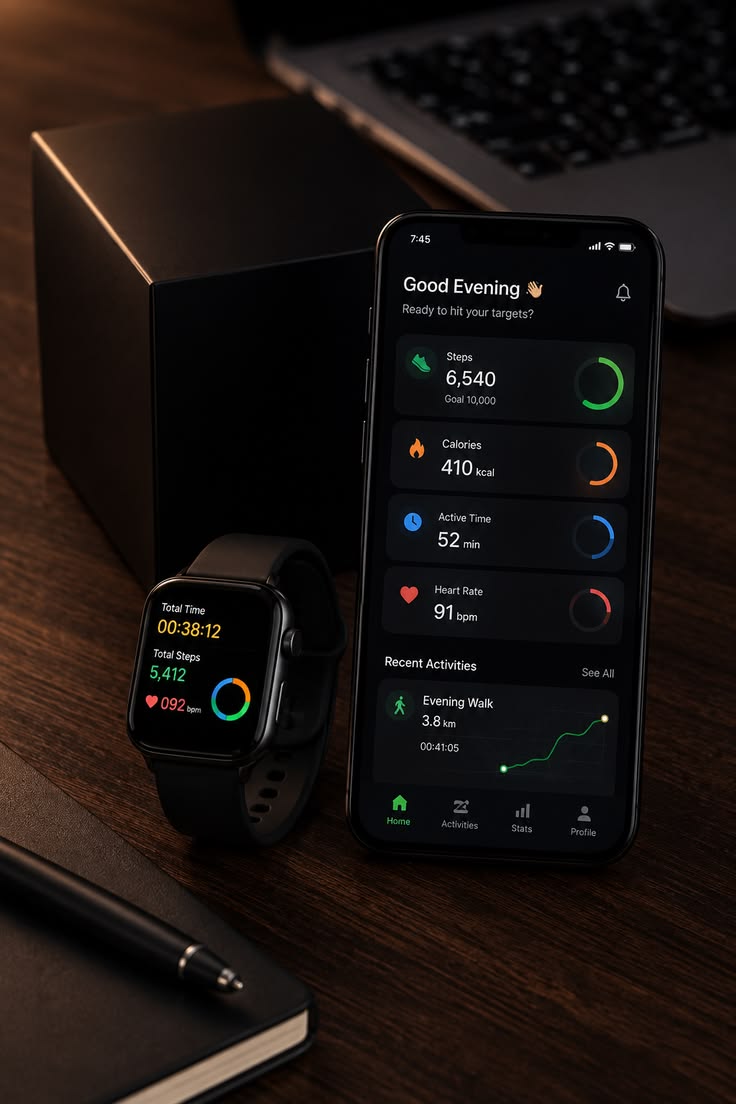
Smartwatches opened the door to wearable technology, but the category has quietly expanded well beyond the wrist. A new generation of devices is finding ways to gather health data, deliver information, and interact with the world in less obtrusive forms.
Categories worth watching
- Smart rings that track sleep and activity with a much smaller form factor than a watch
- Smart glasses that overlay basic information or capture audio and video hands-free
- Fabric-integrated sensors woven directly into clothing to track posture or vital signs
- Hearables — earbuds that go beyond audio to monitor heart rate or translate speech in real time
Why the form factor matters
A device that's easier to forget you're wearing tends to get worn more consistently, which matters a great deal for health tracking specifically — the most accurate sensor is useless if it stays in a drawer. This is a big part of why the industry keeps experimenting with smaller, less intrusive designs.
What to actually look for
Battery life, comfort for all-day wear, and how well a device integrates with the apps you already use tend to matter more day to day than any single flashy feature. The most useful wearable is the one that fits naturally into a routine, not the one with the longest spec sheet.
Frequently asked questions
How accurate are wearable health sensors?
Consumer wearables are generally good for trends over time (like resting heart rate patterns) but are not medical-grade diagnostic devices — unusual readings should be confirmed with proper medical equipment, not treated as a diagnosis on their own.
Do smart rings do the same thing as smartwatches?
They typically focus on a narrower set of metrics — sleep and heart rate tracking especially — trading the broader feature set of a smartwatch for smaller size, longer battery life, and less visible design.
Is wearable data private?
It depends entirely on the manufacturer's data policy — health and location data from wearables is highly sensitive, so it's worth checking what's shared with third parties before enabling every feature.